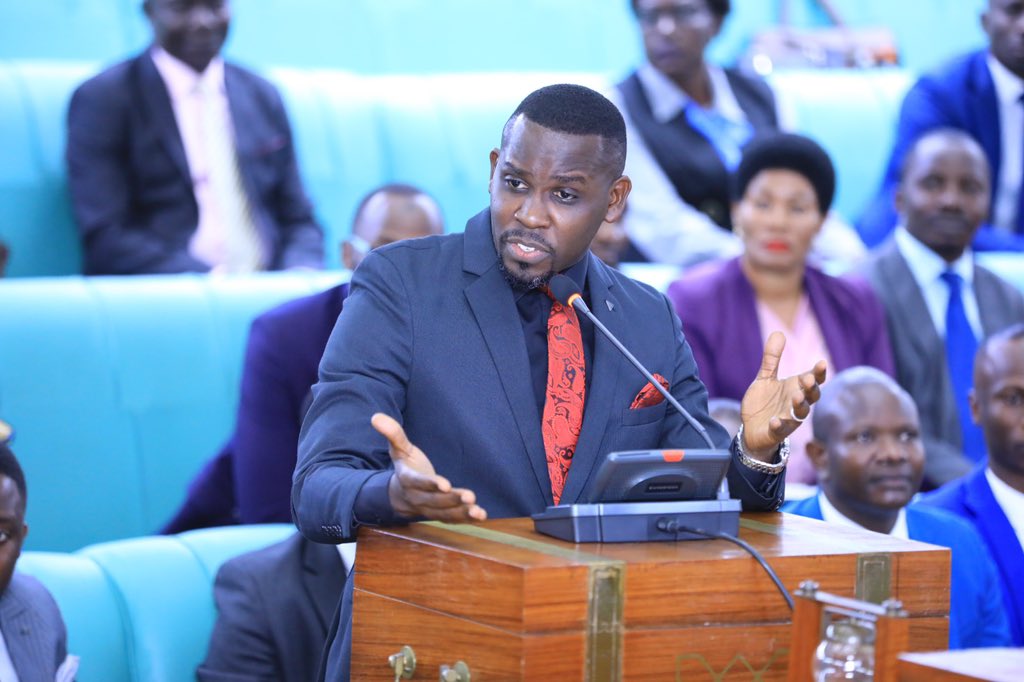
Parliament has received a private member’s Bill seeking to reform the election process, accountability mechanisms and operations of the office of the Leader of Opposition. The Administration of Parliament (Amendment) Bill, 2026, moved by Namara Dennis, Member of Parliament for Buyaga West Constituency, is intended to amend the Administration of Parliament Act, Cap 272, to […]
Parliament has received a private member’s Bill seeking to reform the election process, accountability mechanisms and operations of the office of the Leader of Opposition.
The Administration of Parliament (Amendment) Bill, 2026, moved by Namara Dennis, Member of Parliament for Buyaga West Constituency, is intended to amend the Administration of Parliament Act, Cap 272, to provide for a broader participation of opposition members in electing the Leader of Opposition.
The Bill is anchored on Articles 79 and 94 of the Constitution of the Republic of Uganda, 1995, which empower Parliament to make laws on matters relating to peace, order, development and good governance, and provide for Members of Parliament to introduce private members’ Bills.
The proposed legislation follows the establishment of the office of the Leader of Opposition after Uganda’s transition to a multiparty political system in 2005 and the subsequent constitutional amendments that created the office under Article 82A.
Currently, Section 8 of the Administration of Parliament Act provides that the Leader of Opposition is elected by the opposition political party with the greatest numerical strength in Parliament.
The Bill argues that although the current law provides for consultations with other opposition parties and independent MPs, the actual decision-making power remains with the largest opposition party, limiting participation of other political groups.
According to the Bill’s memorandum, the existing arrangement has affected the ability of opposition MPs to collectively hold the Leader of Opposition accountable and has weakened cooperation among opposition parties represented in Parliament.
The proposed amendments seek to introduce the following reforms:
The Bill proposes that the Leader of Opposition should be elected by all members of opposition parties represented in Parliament and independent Members of Parliament.
However, the person elected must come from the opposition political party with the greatest numerical strength in Parliament.
The procedure for conducting the election would be provided for under Parliament’s Rules of Procedure.
- New Grounds for Removal from Office
The Bill proposes expanding the grounds under which the Leader of Opposition may cease holding office.
In addition to existing grounds, the proposed amendments introduce removal for:
Misbehaviour; Misconduct; Incompetence; and Inability to perform duties due to infirmity of body or mind.
The removal would require a resolution supported by two-thirds of all Members of Parliament.
A Leader of Opposition removed under these provisions would be barred from holding any other parliamentary office during that term.
- Approval of Shadow Cabinet
The Bill proposes that the shadow cabinet appointed by the Leader of Opposition should be approved by Parliament through a resolution.
The proposal is intended to increase accountability and ensure wider participation within the opposition leadership structure.
- Consultation in Parliamentary Appointments
The proposed amendments require the Leader of Opposition to consult all opposition political parties and organisations represented in Parliament, as well as independent MPs, when appointing:
Chairpersons and deputy chairpersons of parliamentary standing committees; Opposition representatives on the Parliamentary Commission; and Uganda’s representatives to international bodies where Parliament is represented.
The Bill provides that a person occupying the office of Leader of Opposition at the time the amendment becomes law would cease to hold office three months after commencement of the Act.
After that period, elections would be conducted in accordance with the new provisions.
The Bill will now undergo the parliamentary process, including consideration by legislators before any possible enactment into law.