


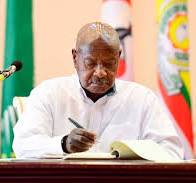
President Yoweri Kaguta Museveni signed the Protection of Sovereignty Bill, 2026 into law, sealing new rules on foreign-linked operations and national governance. The new law sets out to protect Uganda’s sovereignty and introduces tighter regulation on agents linked to foreign entities, including how they are registered, monitored, and funded. It also assigns implementation duties to […]

President Yoweri Kaguta Museveni signed the Protection of Sovereignty Bill, 2026 into law, sealing new rules on foreign-linked operations and national governance.
The new law sets out to protect Uganda’s sovereignty and introduces tighter regulation on agents linked to foreign entities, including how they are registered, monitored, and funded.
It also assigns implementation duties to the Department responsible for peace and security under the Ministry of Internal Affairs, giving state agencies a clearer mandate in enforcing the provisions.
With the President’s assent, the Bill is now officially law and will be rolled out by relevant government bodies under existing legal frameworks.
The law is also expected to streamline accountability, improve governance structures, and reinforce what authorities describe as Uganda’s long-term development and economic transformation agenda.
At the heart of the new law is a controversial offence labelled “economic sabotage,” which criminalises publishing information or engaging in activities considered to weaken, damage or disrupt the country’s economic system. Offenders convicted under this provision face heavy punishment of up to 20 years in prison, a fine reaching 200,000 currency points, or both.
The law also introduces strict controls on anyone acting as an agent of a foreign entity. Such individuals and organisations must now be formally registered with the Ministry of Internal Affairs and cleared by the Minister before operating in Uganda. Those who operate without registration risk up to 10 years in jail or substantial fines.
Under the new framework, applicants seeking registration must fully disclose their identity, business structure, employees, foreign partners and the ownership and control of the foreign organisations they represent. The law also demands transparency on whether those foreign entities are funded or influenced by foreign governments or political groups.
The Minister is also handed sweeping powers to suspend or revoke registration at any time where false information is given, conditions are breached, or where an organisation is deemed a security threat or involved in what authorities describe as disruptive activity.
The Act further tightens the grip on foreign funding, requiring declaration of all sources of money and introducing a requirement for ministerial approval for any foreign financial support exceeding 20,000 currency points within a year. Violations carry tough penalties, including up to 20 years imprisonment and forfeiture of funds to the State.
Any funding linked to attempts to destabilise government or recruit individuals into disruptive activities is now a serious criminal offence, with directors of organisations also personally exposed to prosecution.
Financial institutions are now on the frontline of enforcement, required to verify approvals before processing payments and submit monthly reports on foreign-linked transactions. Failure to comply attracts heavy civil penalties.


